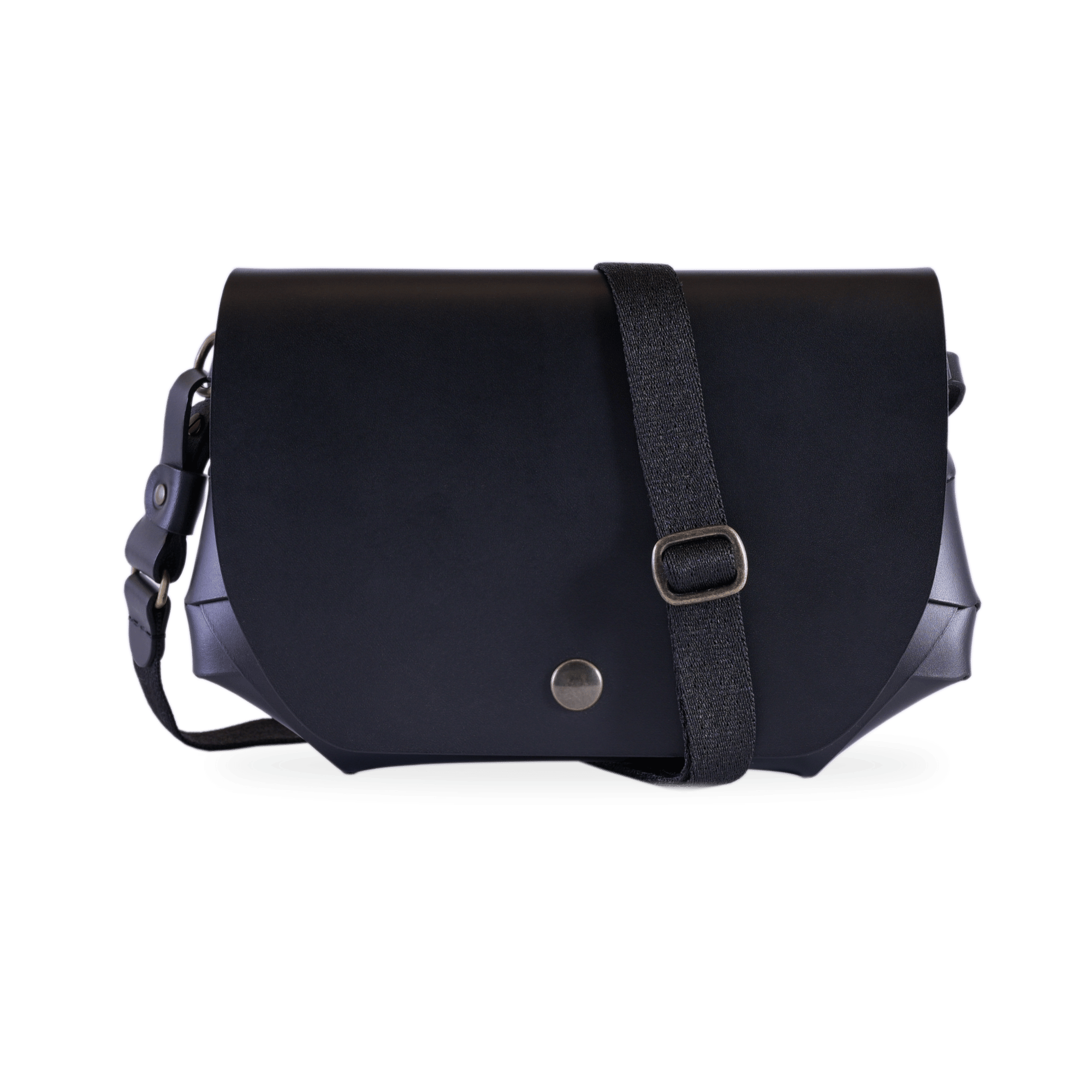



Full grain leather is the top layer of the hide: the part that carries the natural grain of the animal’s skin. It is the strongest, most durable layer of leather and, for that reason, generally considered one of the most exclusive qualities available.
Unlike leather that has been heavily sanded, corrected, or covered to hide its natural character, full grain leather keeps its original surface intact. That surface may include small marks, creases, pores, or subtle variations in tone. These are not imperfections to me. They are part of what makes leather honest, individual, and more beautiful with use.
At Nitmoi, I use full grain vegetable-tanned leather because the material needs to do more than simply look good. It needs to hold its shape, create structure, and last for years.
Why Full Grain Leather Is Stronger
The grain layer is the densest part of the hide. It is naturally more firm, resilient, and durable than the lower layers underneath it.
This strength matters in products that are used every day. A wallet, bag, or glasses case is constantly handled, opened, folded, carried, and placed on different surfaces. Full grain leather can take that use while developing more character over time.
It is not a material that stays exactly the same forever. Instead, it evolves. The surface gradually becomes smoother and more refined through handling, developing what is known as a patina.
Full Grain Leather and Natural Marks
Full grain leather can show small scars, veins, wrinkles, or variations in texture. These marks come from the animal’s life and are a natural part of real leather.
In mass-produced leather goods, these characteristics are often removed through sanding, embossing, heavy coatings, or pigment layers. The result can look more uniform, but it also removes much of the material’s original character.
For me, the beauty of full grain leather is that every hide is slightly different. Two products made from the same leather colour may still have small variations in surface and grain. This makes each piece more individual.
Does a Protective Coating Mean Leather Is Not Full Grain?
Not necessarily.
The full grain leather I use has an additional protective coat on top of the natural surface. This helps protect the leather against everyday use while keeping the grain layer intact.
A protective finish can make leather more practical to use, especially for products that are handled often. It can help reduce staining, make the surface easier to maintain, and give the leather a more consistent finish.
What matters is whether the original grain surface has been preserved. Full grain leather can still have a finish; it does not need to be completely untreated to remain full grain.

Full Grain Leather vs Genuine Leather
The term “genuine leather” can be confusing. It does mean that a material contains real leather, but it does not automatically tell you much about its quality.
Genuine leather can refer to many different types of leather, including lower layers of the hide. These layers are often coated, finished, or embossed to create a more uniform appearance. They may look similar to higher-quality leather at first, but they usually do not have the same firmness, ageing qualities, or long-term durability.
For the products I make, this is important. I need leather with enough body and structure to support the design. A softer or weaker leather may work for other products, but it would not create the same result in Nitmoi designs.
Full Grain Leather vs Top Grain Leather
Top grain leather usually comes from the upper part of the hide as well, but the surface has been sanded or corrected to remove natural marks and create a more uniform appearance.
This does not automatically make top grain leather bad. It can still be a high-quality material and is widely used in premium products. However, once the natural grain has been altered, it no longer has the same original surface as full grain leather.
Full grain leather keeps that natural surface intact. It may show more variation, but it also retains more of the hide’s original character.
Full Grain Leather vs Bonded Leather
Bonded leather is very different from a full hide.
It is made from leftover pieces and fibres of leather that are ground down and combined with a binding material, often similar to latex or polyurethane. The material is then pressed into sheets and finished to resemble leather.
Bonded leather can have a leather-like appearance, but it does not have the same strength, structure, or ageing qualities as full grain leather. It is not a material I would use for Nitmoi products because it does not offer the durability or firmness needed for long-lasting leather goods.
How Full Grain Leather Ages
One of the best qualities of full grain leather is the way it changes over time.
Because the surface is more closed and durable, it develops a refined patina rather than simply wearing away. Through use, the leather gradually becomes smoother, slightly more polished, and more personal to its owner.
It can pick up small traces of daily life, including natural oils from your hands, light marks, and subtle changes in colour. This is part of its appeal.
A well-used leather product should not look factory-new forever. It should become more individual over time.
With occasional care, such as a suitable wax or leather treatment, full grain leather can continue to age beautifully for many years.
Why Nitmoi Uses Full Grain Vegetable-Tanned Leather
At Nitmoi, the choice for full grain vegetable-tanned leather is not only about appearance. It is crucial to the way the products are designed and constructed.
Many Nitmoi products use folding techniques that rely on the firmness and structural quality of the leather. The material needs to create tension in the right places so that the product can hold a clean, sculptural form.
A softer leather would behave differently. It might collapse, lose its shape, or fail to create the same precise lines. Full grain vegetable-tanned leather gives the products the stand, tension, and durability that the designs require.
That combination of material and construction is a big part of what defines Nitmoi.
Is Full Grain Leather Worth It?
For anyone looking for leather goods that are made to last, full grain leather is worth considering.
It is stronger, more durable, and more individual than heavily corrected or bonded alternatives. It may show natural marks and change with use, but that is exactly what gives it character.
Full grain leather is not about perfection in the industrial sense. It is about choosing a material that becomes better, more personal, and more refined over time.


