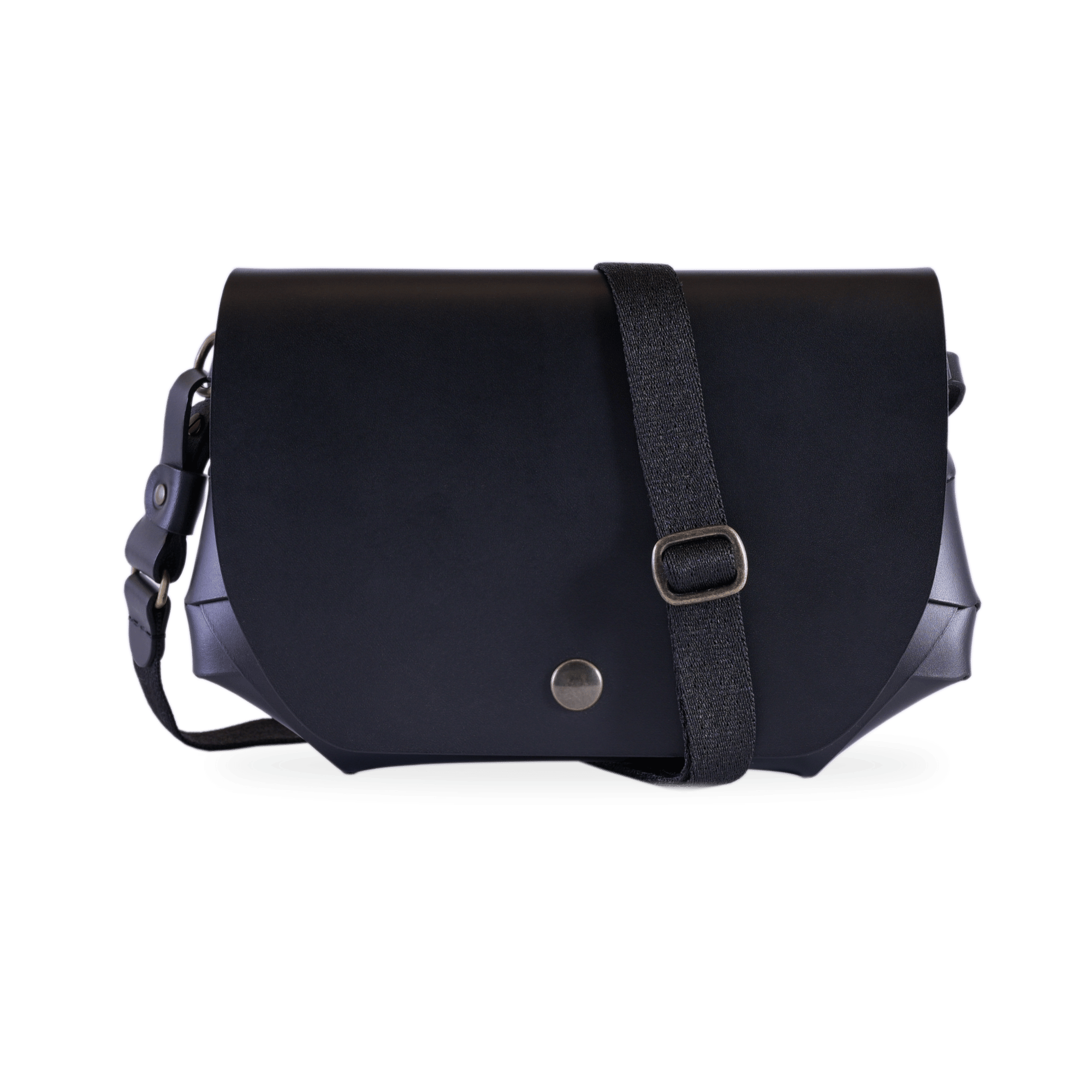



Tanneries make vegetable-tanned leather by using natural tannins from plants such as tree bark, leaves, wood, and fruit. Tanners use this process to turn animal hides into durable leather that lasts for years instead of breaking down over time.
Vegetable tanning is one of the oldest known methods of making leather. It takes more time than many modern tanning methods, but it makes the leather firm, rich in colour, and beautiful as it ages. Making it one of the highest quality leathers.
At Nitmoi, vegetable-tanned leather is an important part of the design process. Nitmoi chooses it for its natural appearance, strength, and structure. The leather needs to support the shapes, folds, and tension that define many of the folded products.
How Is Vegetable-Tanned Leather Made?
Tanners begin the tanning process by placing hides in tanning baths that contain natural tannins. These tannins gradually bind to the fibres of the hide and turn it into leather.
Compared with chrome tanning, vegetable tanning is a slower process. Depending on the tannery, tanners may treat, dye, dry, and finish the leather over several weeks.
This slower process gives vegetable-tanned leather some of its main qualities:
-
A firmer feel and more natural body
-
Rich colour that develops over time
-
Visible grain and natural surface variation
-
A distinctive leather smell
-
The ability to develop a deep patina through use

What Does Vegetable-Tanned Leather Feel Like?
Vegetable-tanned leather often feels firmer and more structured than softer, heavily finished leather.
It has a certain stand or body to it. This is especially important for products like leather bags that need to keep their shape, rather than simply drape or collapse.
For Nitmoi products, like wallets and bags, this firmness is crucial. Many designs use folding techniques that create tension in the leather. The material needs enough strength to hold those folds in place and create a clean, sculptural form.
A softer leather may be suitable for a relaxed bag or garment, but it would not create the same sharp lines and structured shapes.
Does Vegetable-Tanned Leather Age Well?
One of the main reasons people choose vegetable-tanned leather is the way it changes over time.
Rather than staying exactly the same, the leather gradually develops a patina. This can make the surface appear smoother, richer, slightly darker, and more refined.
The leather will respond to daily use. It can pick up small marks, natural oils from your hands, subtle colour changes, and signs of handling. For me, this is not a disadvantage. It is part of what makes a leather product personal.
A good vegetable-tanned leather product should become more interesting with age. It slowly records its use and develops a character that is unique to its owner.

Is Vegetable-Tanned Leather Always Full Grain Leather?
No. Vegetable tanning and full grain describe two different things.
Vegetable tanning describes how tanners turn a hide into leather.
Full grain leather describes which part of the hide makers use: the strongest top layer, with its natural grain surface still intact.
Tanners can veg-tan leather that is not full grain, and they can use other tanning methods for full grain leather. However, full grain vegetable-tanned leather brings together two qualities that work especially well for durable, structured leather goods.
It combines the strength of the top layer of the hide with the natural ageing qualities of vegetable tanning.
Vegetable-Tanned Leather vs Chrome-Tanned Leather
Chrome tanning is a much faster and more common leather tanning method. It can produce leather that is softer, more flexible, and more consistent in colour.
Vegetable-tanned leather usually has more firmness and develops a more visible patina. Chrome-tanned leather often keeps a more even look over time. It is a good choice when softness, water resistance, or bright colours matter most.
Neither method is automatically right or wrong. They simply create different materials with different qualities.
Nitmoi uses vegetable-tanned leather because it adds structure to the designs. It creates tension in the folds. It also becomes more personal over time.
Is Vegetable-Tanned Leather More Sustainable?
Vegetable tanning is often seen as a more natural method because it uses tannins from plants instead of chromium salts. However, it is important not to treat the term as an automatic guarantee of sustainability.
Many things affect leather’s environmental impact, including where the hide comes from, how the tannery uses water and energy, the chemicals and dyes it uses, transport, and how long the product lasts.
For me, durability is an important part of making a more considered product. A leather item that is made well, cared for, repaired where possible, and used for many years is more valuable than something designed to be replaced quickly.
Why Vegetable-Tanned Leather Shows Marks and Variation
Vegetable-tanned leather often has more visible natural imperfections and character than heavily corrected leather.
You may see wrinkles, pores, scars, grain variation, or small tonal differences across the surface. These details come from the natural hide and the way the leather takes in colour and changes over time.
Every hide is different, which means no two products are completely identical.
I see this as part of the beauty of working with leather. It is a natural material, not a printed synthetic surface. Small differences make each piece feel more individual and give it a sense of honesty.
How to Care for Vegetable-Tanned Leather
Vegetable-tanned leather benefits from occasional care, especially when it is used regularly.
A good leather wax or conditioner can nourish the leather, keep it flexible, and help prevent it from drying out. It is best to use a small amount and test any treatment on a hidden area first.
To keep vegetable-tanned leather looking its best:
-
Avoid leaving it in direct sunlight for long periods
-
Keep it away from excessive moisture and heavy rain
-
Let wet leather dry naturally at room temperature
-
Use a soft cloth to remove dust and light dirt
-
Apply a suitable leather treatment occasionally, not excessively
With the right care, vegetable-tanned leather can last for many years and become more beautiful through use.
Why Nitmoi Uses Vegetable-Tanned Leather
At Nitmoi, vegetable-tanned leather is chosen because it allows the material and the design to work together.
The firmness of the leather gives the products structure. It creates the tension needed in the folding techniques and helps form the clean, structured shapes that are central to the designs.
It is also a material that rewards use. Over time, the leather becomes smoother, more refined, and more personal. It does not stay untouched, but evolves into something that reflects the life of the person using it.
That is what makes vegetable-tanned leather special to me. It is not only a material for making a product. It is a material that continues to develop long after it leaves the workshop.


